A game-changing gift: how one family foundation’s generosity is bringing Alzheimer's detection home
11/2/2026
Imagine a future where detecting Alzheimer’s disease doesn’t require a trip to a specialist, a spinal tap, or an expensive brain scan. Imagine instead a simple finger-prick test — completed at home, mailed to a laboratory, and capable of identifying the earliest biological signs of a disease that affects millions. That future is closer than ever, thanks to a landmark philanthropic investment from the JTMF Foundation.
JTMF has committed $538,800 to the Banner Alzheimer’s Institute in support of its groundbreaking Remote Fluid Biomarker Research program — a gift that could fundamentally change who gets access to early Alzheimer’s detection, and how.
“Alzheimer’s disease is a silent thief. Long before a person forgets a name or misplaces their keys, the disease has already been quietly reshaping the brain — sometimes for decades,” explains Corey Casper, MD, Banner Health’s Chief Research Officer. “Today, the most advanced tools for catching those early changes require specialized medical equipment, in-person clinic visits, and often a lumbar puncture, commonly known as a spinal tap. These barriers make early detection difficult, expensive, and inaccessible for far too many people.”
The Banner Alzheimer’s Institute has spent years working to change that. BAI was among the first research institutions in the world to demonstrate that a simple finger-prick blood test could detect Alzheimer’s-related biological changes — a finding so significant it was published in Nature Medicine, one of the most prestigious scientific journals in existence. Now, with the generous support of the JTMF Foundation, BAI is ready to take that discovery to the next level.
The science: three aims, one transformative goal
Thanks to this funding, BAI researchers will pursue three carefully designed study aims between now and March 2027, led by Principal Investigator Dr. Nicholas Ashton, a world leader in fluid biomarker research, and Co-Investigator Dr. Jessica Langbaum, who brings deep expertise in remote participant enrollment and operational direction.
- Evaluate whether small capillary blood samples — collected via finger-prick — can measure key Alzheimer’s biomarkers with the same accuracy as a traditional blood draw. Two hundred participants will provide paired samples, allowing researchers to directly compare results.
- Test multiple finger-prick collection devices and techniques using those same 200 participants to identify which approach delivers the highest success rate, best sample quality, and most reliable biomarker results. A particularly promising method involves dried blood spots — tiny drops of blood collected on a filter paper card that are stable enough to be stored for months and even mailed through regular post.
- Take the best-performing collection method entirely outside of a clinical setting. Participants recruited through BAI’s Alzheimer’s Prevention Registry and its GeneMatch program will receive a collection kit by mail, complete the sample collection at home, and return it for analysis. This will mark the first demonstration of fully remote Alzheimer’s biomarker testing in a U.S. research population, laying the practical foundation for future large-scale studies that can reach geographically and demographically diverse communities across the country.
A personal mission: the Marick family’s story
For the members of JTMF, this investment is more than a philanthropic decision — it’s personal.
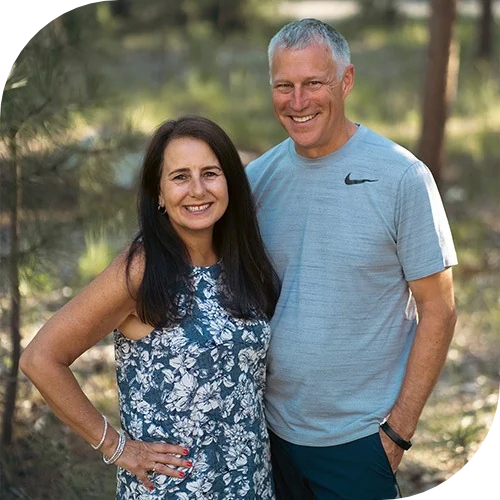
“There has been tremendous progress and growing optimism around the prevention and treatment of Alzheimer’s disease,” Tami Marick, JTMF Trustee shared. “When Banner approached us about supporting a project that could potentially enable individuals to assess their risk from virtually anywhere, we immediately recognized its potential impact. Our families know firsthand how long and challenging the journey to diagnosis can be. That experience makes us especially grateful for the opportunity to help advance this work.”
The JTMF Foundation’s commitment to this research reflects a deeply held belief that the promise of early detection must be available to everyone — not just those fortunate enough to live near a major medical center. Based in Oregon, everyone at JTMF understands the realities of rural living and the health care access challenges that come with it.
“We understand many of the challenges that come with residing in a rural community, particularly when it comes to accessing health care,” said John Marick, JTMF Trustee. “We also recognize that unequal access to care affects individuals and families regardless of where they live. That is why we take particular pride in supporting organizations and initiatives that expand accessibility. As new treatment options become available, ensuring that everyone has access to early detection is more important than ever. What makes this project so exciting is its potential to help make that a reality.”
Closing the gap for every patient and family
“BAI’s research has already proven that remote Alzheimer’s testing is scientifically possible. What this gift does is help prove it is practically possible — scalable, reliable, and accessible to the diverse populations who need it most,” says Dr. Casper.
The study is expected to enroll participants aged 55 and older, with recruitment specifically designed to include individuals from both urban and rural communities across the United States.
The implications extend far beyond this single study. By validating remote blood collection methods, this work creates a clear pathway toward clinical trials that are more inclusive, earlier identification of disease before irreversible harm occurs, and equitable monitoring of treatment and progression across diverse populations.
For the JTMF team, the opportunity to help bring that vision to life is one they do not take lightly.
“We are deeply grateful for the opportunity to support the talented researchers and dedicated teams working to make these blood tests accessible to everyone,” said Tami Marick. “Their work is turning what once seemed impossible into reality, and the potential impact on individuals and families affected by Alzheimer's is truly extraordinary.”
“This gift arrives at a rare and important moment — when the science is ready, the tools are within reach, and the need has never been more urgent,” says Dr. Casper. “With millions of individuals and families affected by Alzheimer’s today, and millions more at risk, investments like this one are not simply contributions to research. They are investments in a future where Alzheimer’s detection is no longer defined by proximity to a specialist or access to a clinic — but by the unwavering commitment to reach every person who needs it.”