Physician spotlight: Moises Nevah Rubin, MD
9/10/26
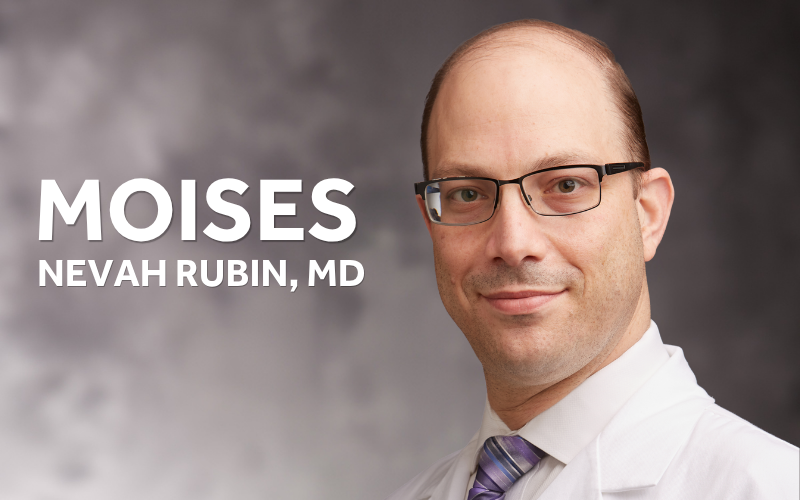
Meet Moises Nevah Rubin, MD, Medical Director of Liver Transplant at Banner – University Medical Center Phoenix — a physician whose path into hepatology was shaped not by ambition, but by loss. His story begins in a rural hospital in Panama, and it has carried him to the forefront of one of the most complex and life-changing fields in medicine.
In the Q&A that follows, Dr. Nevah Rubin shares the story behind his calling, the meaning philanthropy holds in his work, and why he believes that filling the gaps medicine alone cannot fill is where the most profound healing truly begins.
Q: What made you want to go into the specialty of liver diseases?
A: My journey into hepatology began long before I ever set foot in a transplant center. It began with a young girl in a rural hospital in Panama. During one of my weekend shifts as a young general physician, I cared for a critically ill young patient who came to us with acute alcohol-associated hepatitis. She was so sick, and we had so little to offer her. There was no transplant program, no advanced options for patients facing chronic liver disease, end-stage liver disease, or acute liver failure — just us, our hands, our knowledge, and our hearts. For many days, we fought alongside her with every treatment and intervention available to us. But despite everything we gave, we lost her. Her passing didn't discourage me — it ignited something deep within me. It made me ask, 'What if there had been more options? What if we could do better?' That question has never left me. She is, in many ways, the reason I do what I do every single day. Every patient I care for, every family I sit with, every difficult conversation I have — carries a piece of her story with it. I didn't just choose liver disease. In many ways, it chose me.
Q: How has philanthropic support impacted your work as a physician and the lives of your patients?
A: Philanthropy isn't just a word in our program — it is something we live and breathe every single day, and I have seen firsthand the profound difference it makes in the lives of our patients. When someone is facing a transplant, the medical journey is only part of the story. Behind every patient is a family navigating fear, uncertainty, financial hardship, and in many cases — something as fundamental and heartbreaking as not knowing where their next meal will come from. As a hepatologist, I see this reality up close, and it never gets easier to witness. That is why I am so incredibly proud of what our Shared Leadership Team has built through our food pantry program. Born out of creativity, compassion, and an unshakeable belief that our patients deserve every possible chance at success, this program now reaches over 100 transplant families — ensuring that something as basic, yet as vital, as proper nutrition never becomes a barrier to a successful transplant journey. When I think about what philanthropy truly means in medicine, this is it. It is not abstract. It is a bag of groceries. It is a family sitting down to a meal together. It is a patient who can focus on healing because one less worry has been lifted from their shoulders. If we could expand this program to reach every single transplant patient in our care, I genuinely believe we would see even greater outcomes, stronger recoveries, and more families kept whole. That is the power of philanthropic support. It fills the gaps that medicine alone simply cannot fill — and in doing so, it saves lives in ways that never show up in a chart, but are felt deeply, profoundly, and forever.
Q: What is the best piece of advice you've ever been given?
A: Never give up, follow your dreams and always trust God.
For Banner Health Foundation's corporate and foundation partners, the transplant food pantry represents a rare and immediate opportunity — a chance to see the direct, tangible impact of a gift. From better shelving to the protein shakes that are so critical to patient recovery but remain out of reach financially, every contribution would land directly in the hands — and the lives — of patients navigating one of the most vulnerable chapters of their lives.
Contact Shannon Fleischman to get involved in the food pantry program.